Workwear That Keeps Up With Daily Movement
In logistics, clothing gets tested hard. Drivers climb in and out of vehicles all day, warehouse staff handle stock in warm stores, and dispatch teams move between loading bays, forklifts and paperwork. Printed uniforms need to stay neat, easy to identify and suitable for repeated washing, especially where dust, grease and early morning loading times are part of the job.
For this kind of work, we usually recommend garments that are easy to sort by role and size. T-shirts are common for general staff, while heavier cotton or poly cotton shirts suit supervisors and site leaders. For outdoor work in and around Bloemfontein, a darker colour often wears better and hides marks longer. In winter, long sleeve options help for early starts, while lighter weight tees are better for hot warehouse floors and summer deliveries.
Clear branding also helps with security and visitor control. When a driver arrives at a client site in Welkom, Bethlehem or Kroonstad, a neat printed shirt makes it easier for reception and loading staff to identify who they are dealing with. That saves time and reduces confusion at busy gates.
Typical Print Setups For Fleet, Stores And Dispatch
The right print setup depends on how the clothing will be used. For logistics teams, the front chest is often enough for a company name or staff role. The back can carry a larger logo, branch name or contact line. Sleeves are useful for smaller marks such as vehicle numbers, department names or contract references. If the same uniform is worn by several teams, colour coding by department can work well too.
We handle artwork setup and colour matching so the print stays consistent across repeat orders. That matters when you are topping up uniforms every few months and need the same shade and placement. If your team works across several towns, it helps to keep one standard layout for all branches, then add a local identifier where needed.
- Chest print for logo or staff role
- Back print for bigger branding or route name
- Sleeve print for branch, contract or vehicle reference
- Colour matched prints for repeat orders
- Individual bagging for easy issue to staff
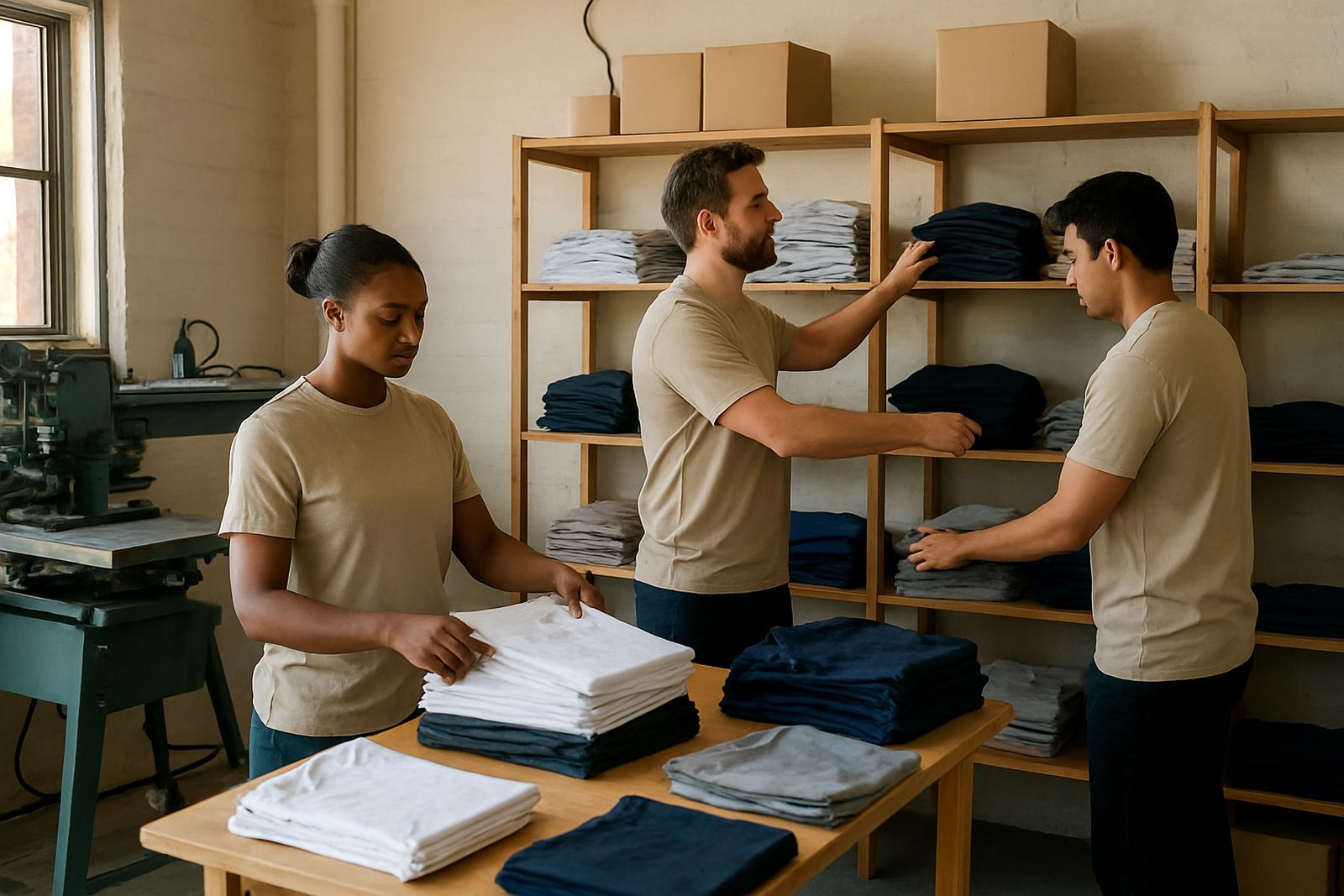
For bulk runs, we also separate garments by size before dispatch. That makes issuing easier for HR, depot managers and supervisors who need to hand out shirts quickly before a shift starts.
Planning Uniform Layouts For Busy Depots
Good planning saves money and avoids reprints. Start by deciding who needs what. A driver may need two or three shirts, a warehouse picker may need more, and a dispatch supervisor may need a different colour or collar style. If your team wears uniforms daily, it is wise to include spare pieces for new starters and replacements. Wet weather, oil stains and stockroom work mean shirts do not last forever.
Think carefully about where the print will sit. A logo placed too low can disappear under a hi-vis vest or safety bib. A print that is too large may feel heavy on lightweight shirts. For most logistics clients, we keep the layout simple and readable from a short distance. That works better in loading areas, at gate checks and when staff are on the move.
If you run operations from Hamilton, Bloemfontein or nearby industrial areas, delivery timing matters too. It is better to place orders before a big stock cycle, month end rush, or a new contract start date. That gives enough time for artwork approval, printing and dispatch without holding up the team.
Common Mistakes That Cost Time And Money
One of the most common mistakes is ordering the wrong size mix. Logistics teams often have mixed shifts and a mix of body types, so guessing sizes usually leads to shortages and returns. Another issue is printing too much detail on small garments. Fine lines, tiny text and low contrast colours can be hard to read once the shirt has been washed a few times.
Some businesses also forget that workwear is washed often. A light colour can look smart on day one but may show dirt too quickly in warehouse and yard conditions. On the other hand, very dark garments can fade if the print method or fabric choice is not suited to regular washing. We help clients choose a balance between appearance and practical use.
- Do not approve artwork without checking spelling and role names
- Do not choose garment colours that clash with your logo
- Do not under order spares for new staff or damaged items
- Do not place key branding where it will be covered by PPE
- Do not skip size sorting if the order is going to more than one site
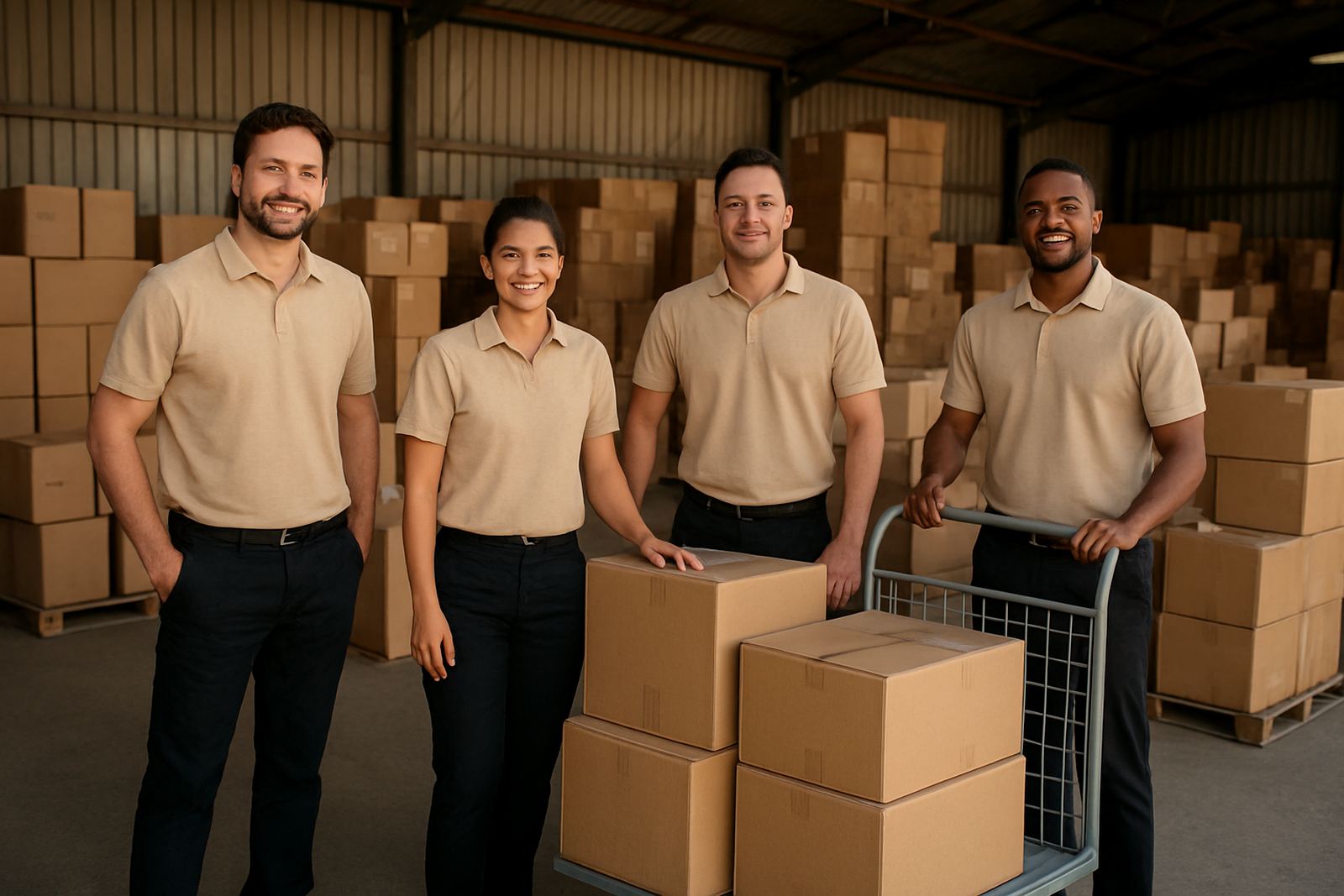
For couriered orders across the Free State and nationwide, correct packing also matters. If uniforms are not bagged and labelled properly, the wrong staff can end up with the wrong sizes and the issue becomes harder to fix.
Budget Ranges For Logistics Printing Jobs
Costs depend on garment type, print size, number of colours and the quantity ordered. Small run printing is usually more expensive per item, while bulk orders bring the unit cost down. For logistics uniforms, many clients start with a practical budget of around R120 to R220 per printed T-shirt, depending on fabric and print size. Polycotton shirts, heavier work tees and larger back prints can push the price higher.
For supervisors, dispatch leads or customer-facing staff, collared shirts or stronger garments may sit in a higher range, often from about R180 to R320 per item when printed. If you need size sorting, individual bagging and nationwide delivery, that should be included in the overall planning so there are no surprises later. A larger order for several branches can be planned in stages to suit monthly budgets.
If you are ordering for a new depot in Botshabelo, Thaba Nchu, Parys or further afield, it can help to begin with a sample run or a smaller first batch. That way you can check fit, comfort and print position before scaling up the full allocation.
How We Handle Repeats, Top-Ups And Couriers
Logistics clothing often needs repeat orders because staff change, sizes shift and extra shirts are needed after busy seasons. We keep artwork and print settings on file so repeat batches can match the original order as closely as possible. That is useful for companies with multiple delivery teams or warehouse shifts that need the same look across sites.
Our team works from Hamilton in Bloemfontein and serves clients in Bloemfontein, Hamilton, Botshabelo, Thaba Nchu, Welkom, Bethlehem, Kroonstad and Parys, with couriered orders going nationwide. The process is practical: confirm the garments, approve the artwork, sort sizes, print, then pack for delivery. If there are separate teams for driving, loading and admin support, we can split the order so each department gets the right mix.
For businesses that operate on tight schedules, clear communication helps. Send the size list early, check role names carefully and allow time for courier transit. That avoids delays when a vehicle contract starts or a warehouse team needs uniforms before a seasonal peak.