Why dark garments need a different print approach
Dark shirts and hoodies absorb light, so colours that look bright on a computer screen can look dull if they are printed straight onto black, navy or charcoal fabric. That is why dark shirt printing usually needs a white base, careful colour separation and a press setup that suits the fabric type. If the artwork has fine text, gradients or pale tones, the prep work matters even more.
In Bloemfontein and other Free State towns, we often see orders for black event tees, navy school tops and dark corporate golf shirts. These garments can look smart and practical, but only if the print is planned for the cloth, not just copied from a light shirt job.
Choose artwork that will hold up on a dark base
Artwork for dark shirt printing should be built with strong contrast in mind. Thin lines, pale pastel colours and very soft shading can disappear once they are placed on dark fabric. Solid blocks, bold lettering and clear shapes usually print better and stay readable after washing.
- Use thicker text weights for names, slogans and team names.
- Keep small details to a minimum on left chest prints.
- Check that logos have enough space around them so they do not feel cramped.
- For photographic images, expect a more controlled print and not a full photo finish.
It also helps to supply artwork in a clean digital format. That gives the production team a better starting point for colour matching and sizing. If a file is fuzzy, stretched or saved from a social media post, the end result will likely lose detail.
Underbase, ink choice and why colour changes on dark fabric
To make bright colours appear properly on dark garments, a white underbase is often printed first. This white layer creates a brighter surface for the top colours to sit on. Without it, reds, yellows and blues can look muddy or far too muted.
The ink choice also depends on the garment and the expected use. Workwear that is washed often may need a different finish from a one-day event shirt. Cotton, cotton blends and polyester all react differently, so the print method should match the garment rather than using a one-size-fits-all setup.
In winter jobs, especially where loadshedding can affect drying times, it is important to allow proper curing and not rush garments off the press. If the print is not cured correctly, the colour can crack or fade sooner than it should. A rushed job may look fine on collection day, then fail after a few washes.
Fabric matters more than people think
Dark shirt printing is not only about the ink. The garment fabric has a big effect on how the print sits and how long it lasts. Smooth cotton tees are easier to print cleanly than textured polyester sportswear, while some blended fabrics need extra care to avoid heat marks or bleed-through.
Before placing a bulk order, it is worth deciding where the shirts will be used. School event shirts, staff uniforms and sportswear all need different performance. A shirt for a family fun run in Bloemfontein may need more breathability, while a warehouse uniform in Hamilton may need a heavier, hard-wearing cloth.
- Cotton is often best for crisp detail and colour pop.
- Polyester is better for sportswear, but heat control is more sensitive.
- Blends can work well, but the fabric finish should be checked first.
- Heavier garments give a firmer print area, but can feel warmer in hot weather.
Sizing, placement and printing for groups
When you are printing for a team, school or event, consistency matters. The same logo must land in the same place on every shirt, and each size should still look balanced. A print that looks fine on a medium can sit too high on a small or too low on an extra large if the placement is not adjusted properly.
That is where size sorting and individual bagging help. If shirts are sorted by size before dispatch, it is easier to keep crews organised for events in places like Botshabelo, Thaba Nchu, Welkom or Bethlehem. It also reduces mistakes when orders are collected by different departments or handed out by coaches and staff. For larger runs, batch checking is just as important as the print itself.
Uniform jobs also need a practical finish. If the shirts are going to be worn on the shop floor, at schools or during field work, the print should not feel too stiff or heavy. A clear, tidy print that sits flat is usually better than one that tries too hard to be oversized.
A local example: black event tees for a Free State campaign
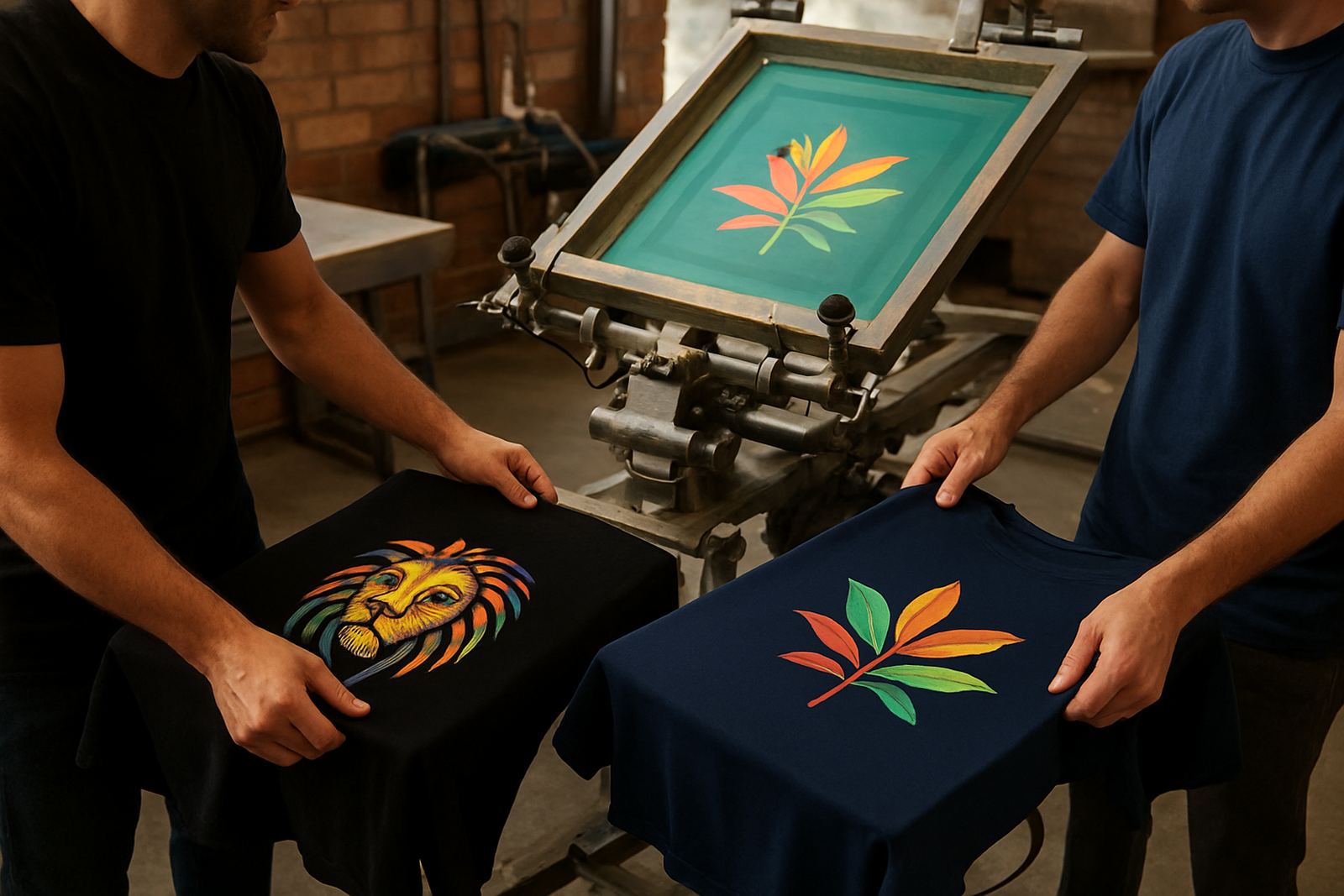
A common request in the Free State is for black shirts with bright print for launches, church gatherings and community events. A client in Kroonstad might want a vivid orange logo for a weekend activation, while a sports group in Parys may need white numbers and a bright front print for a night event. In both cases, the dark base makes the artwork harder to read unless the underbase and placement are handled carefully.
For a recent style of order, the key was keeping the design bold and using clear contrast on the front and back. The shirts were sized for different age groups, then bagged individually so each team member got the correct item. That kind of process saves time at the venue and avoids confusion when the weather changes or the venue is busy.
Dark garments also hide some marks better than light ones, which is useful for outdoor promotions and long event days. But the print itself still needs to be clean. A dark shirt can make a weak print look weaker, so the setup has to be right from the start.
How to get a better result from your order
If you want strong results on dark garments, it helps to start with clear instructions. Share the garment colour, the number of items, the print positions and whether the order is for daily wear or a one-off event. That gives the production team a better chance of matching the right print method to the job.
- Send artwork early so colour checks can be done before printing.
- Confirm shirt colour and size range before production starts.
- Ask about print feel if the garment will be worn all day.
- For couriered orders, allow enough time for printing, checking and dispatch.
From Hamilton in Bloemfontein, orders can be prepared for collection or couriered across the Free State and nationwide. Whether the job is for 20 event shirts or a larger uniform run, dark shirt printing works best when the detail is planned upfront and the garment choice is treated as part of the design.