What the print position needs to do
The main question is simple: what do you want the garment to do for you? If the shirt is for staff, the print should help customers identify the team quickly. If it is for a school event or sports day, the message may need to be seen from across a field or hall. If it is for a promo giveaway, the print should be easy to notice when someone is facing the crowd or moving through a busy space.
Front prints work well when the message must be seen at close range, like a name, small logo or role title. Back prints are stronger when you need size and distance. A full back print gives more room for larger text, sponsor details or a bold image. In Bloemfontein, where school functions, church gatherings and trade days often mix practical wear with branding, the best choice is usually the one that fits the setting, not just the artwork.
When a front print is the better choice
A front print suits garments that must look neat and tidy from the front at all times. It is a common choice for uniforms, hospitality wear, retail staff shirts and smaller team orders. If the garment will be worn indoors, under jackets or in meetings, the front placement keeps the branding visible without making the shirt feel too busy.
Front prints also work well when the logo is the main feature and you do not need a large message. Many clients choose a left chest print for a professional look, then add a small back neck mark or sleeve detail if needed. That gives the garment identity without overdoing it.
- Best for names, roles and smaller logos
- Good for uniforms worn in customer-facing settings
- Suitable when the wearer often has bags, aprons or jackets on
- Works well for clean, understated branding
For schools in Hamilton, Botshabelo or Thaba Nchu, a front print can also make sorting easier when learners wear the same base shirt but different house colours or activity groups. The branding stays visible while the shirt remains practical for daily use.
When a back print makes more sense
Back prints are the stronger option when you want to be seen from a distance. This is useful for event staff, security teams, sports squads and crews working in a busy area. A large back print gives you more space for wording, and it can carry a bolder design without crowding the front of the garment.
If the shirt will be worn at a market, fun run, school fair or festival, people often see the wearer from behind first. A back print helps with quick recognition and can carry a clear callout such as a team name, department, or event title. On sportswear, it also gives room for numbers and names, which is why it remains a practical choice for jerseys and training shirts.
- Best for visibility in crowds or on the move
- Useful for sportswear, security and event teams
- Allows larger text and wider artwork
- Helps people identify staff from a distance
In our work across Bloemfontein and nearby towns like Welkom and Kroonstad, we often see that a back print is the right answer when the client wants the shirt to be noticed before the person reaches the front row. That is especially useful where the main message needs to read clearly outdoors.
How garment use changes the answer
The right print position depends on how the item will be worn during the day. A school shirt worn under a jersey needs a different layout from an event shirt worn on its own. A uniform for a cold warehouse or early morning dispatch team may only show the front part most of the time, while a promotional shirt at a sports day might need the back to do the talking.
It also helps to think about movement. If the wearer bends, carries boxes, hands out flyers or works behind a counter, the print should stay readable and not sit where it will crease too much. For garments that need to look tidy after many washes, simpler placements often hold up better and stay easier to maintain. On cotton shirts in summer, and especially in the Free State heat, the print should also remain comfortable enough that staff will wear it properly instead of leaving it in the cupboard.
Before choosing, ask these practical questions:
- Who needs to read the message, and from how far away?
- Will the garment be worn indoors, outdoors or both?
- Is the print mainly for identity, promotion or instruction?
- Will jackets, aprons or bags cover part of the shirt?
- Does the design need one strong focal point or more than one?
What works best for schools, businesses and events
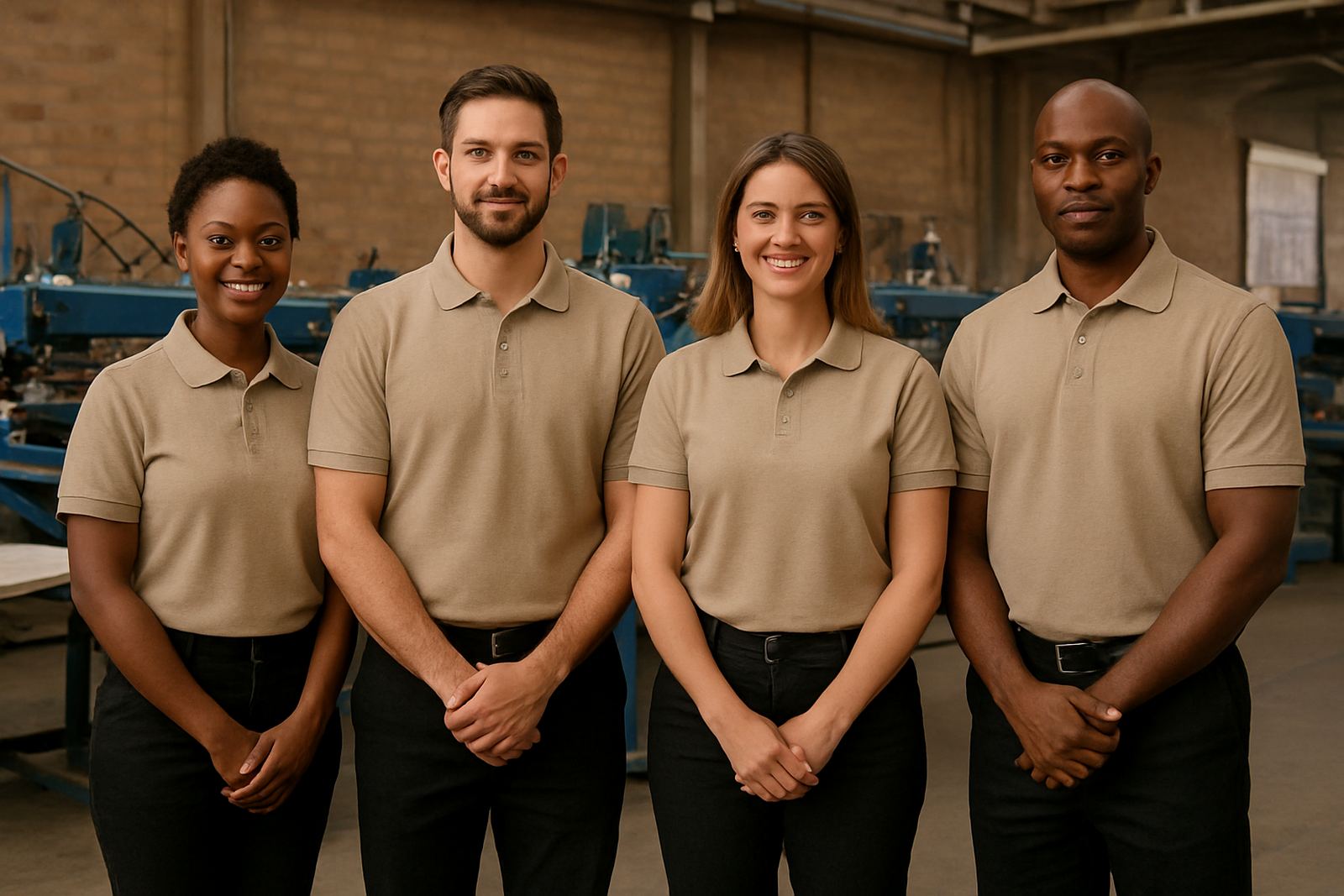
Different users need different answers. Schools often want a front print for a neat, uniform look, while sports teams may prefer a back print for names and numbers. Businesses usually lean toward front placement for staff identification, but event organisers often ask for a bigger back print so crowds can spot the team quickly.
For clients in Bethlehem, Parys or across Bloemfontein, we often recommend matching the print position to the job on the day. If the shirt is for a class outing, front and back together can work well, with a smaller chest logo and a larger organiser print on the back. If it is for a trade stand, a clear back print can help people remember the name long after the conversation ends. The key is not to overload the garment with too much information on both sides unless there is a real need for it.
When budgets are tight, one well placed print is often more effective than two rushed ones. It keeps the garment cleaner, lowers print cost and makes production easier when you need size sorting, individual bagging or a bulk order turn around.
A practical example from Bloemfontein
Take a local school fun day in Hamilton. The organising team needs shirts for staff, helpers and runners. The helpers on the gate need to be identified fast, so a front print with a role title works best. The runners, on the other hand, need a large number and event name visible from the side and back, so a back print is the better choice. If the same order also includes sponsors, a small front logo plus a full back sponsor panel may be the right balance.
That is the kind of decision that saves time on the day. People know where to go, staff are easy to spot, and the garment still looks tidy when the event is over. For many of our clients, especially when couriered orders are going out across the Free State, the most practical option is the one that can be understood instantly by the person wearing it and by everyone around them.
When the brief is clear, the print position becomes part of the job, not a guess. That is why we check the use case, the garment type and the size of the artwork before recommending front, back or a combination of both.