
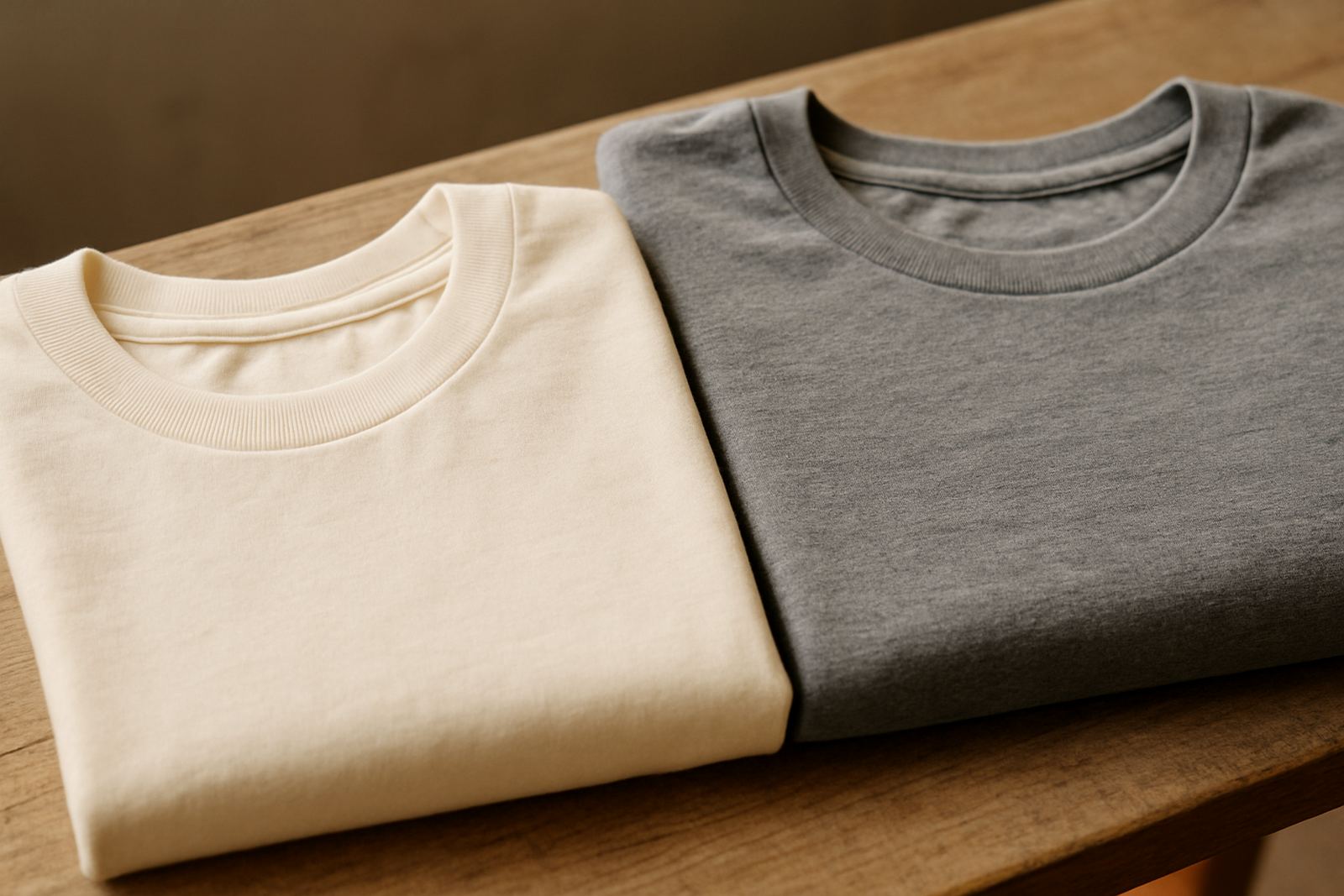
Why the fabric blend matters before any print goes on
When people compare cotton and polycotton, they often start with comfort and stop there. That is only part of the decision. A shirt that feels soft on day one may behave very differently after repeated washing, long shifts, or a week of event use in Bloemfontein wind and dust. The blend also affects how clean the print looks, how the garment hangs on the body, and whether it keeps its shape after a few months of wear.
For businesses, schools and sports groups, fabric choice should match the job. A staff shirt for front-of-house use is not the same as a campaign shirt handed out by the hundred, and it is not the same as a work top that gets washed every few days. The wrong fabric can make a good print look tired too soon.
Cotton: soft feel, good comfort, but more care needed
Cotton is usually chosen for comfort. It feels natural against the skin, breathes well, and is often preferred for shirts worn for long periods in warm weather. For teams in retail, offices, events or schools, cotton can be a strong choice where comfort matters as much as appearance.
It also takes print well when the garment is good quality and properly prepared. On the other hand, cotton can shrink more than blended fabric, and some lighter cotton shirts wrinkle easily. In a busy laundry cycle, that means more care and sometimes a less consistent finish. If you need garments to keep looking sharp with less ironing, this is worth thinking about.
- Best for comfort-driven wear where softness matters most
- Useful for casual staff shirts, promotional wear and some school items
- Needs closer attention to washing instructions and shrinkage
- Can cost more than a comparable blended garment depending on weight and quality
Polycotton: steadier shape, easier washing and better value
Polycotton combines cotton with polyester, usually to improve durability and reduce creasing. For many South African organisations, that makes it the practical option. Uniforms for warehouses, schools, security teams and event crews often need to survive regular wear, quick turnaround washing, and long hours on the move. Polycotton usually copes better with that routine.
It tends to hold its structure well, dries faster, and is often more affordable in bulk. That matters when you are printing 50 shirts for a small run or 500 for a national event. It is also a useful option when deliveries need to be bagged by size and handed out quickly, because the garments are usually more uniform in finish. For many clients, that consistency is worth more than the slightly softer hand feel of pure cotton.
- Good for uniforms that must keep their shape
- Often easier to wash, dry and store
- Useful for bulk orders where price per item matters
- Better suited to repeat wear in schools, events and work environments
How each fabric affects screen printing results
The fabric blend influences how ink sits on the shirt and how the final print wears. Cotton usually gives a classic, solid feel, especially on darker garments where the artwork needs a clean base. Polycotton can also print well, but the process needs the right setup and careful colour matching so the result looks even across the whole order. That is why artwork prep and quality control matter just as much as the shirt itself.
For fine detail, bold logos and high-contrast artwork, both fabrics can perform well if the print method is matched to the garment. Where the difference shows up is after washing. Cotton can fade or change shape more noticeably, while polycotton often stays looking more organised. For companies issuing uniforms in Bloemfontein, Botshabelo or Thaba Nchu, that can mean fewer complaints from staff who expect the same look week after week.
We often see customers focus on the colour of the shirt and forget the weight of the fabric. A heavier shirt may hold print better, but if it is too warm for outdoor use, people stop wearing it properly. That is why it helps to balance comfort, structure and budget before placing the order.
Choosing by use case, not by habit
The best choice depends on how the garment will be used. A school sports day shirt, a volunteer shirt for a weekend event, and a trade uniform for daily wear all have different needs. If the shirt is for a once-off campaign, comfort and lower cost may be the main priorities. If it is for staff across several branches or repeated use in a warehouse, structure and washability matter more.
A simple way to compare the two options is to ask these questions before ordering:
- How many times will the shirt be worn and washed?
- Will the team need a softer feel or a neater, more structured look?
- Is the order small, or are you pricing a bulk run across several branches?
- Will the garments be used indoors, outdoors, or in both?
- Do you need the same look for adults, youth sizes, and mixed teams?
Answering those questions usually makes the fabric decision much easier. A shirt that suits a one-day event in Parys may not be the best fit for a school or business in Welkom that needs regular reorders.
A Bloemfontein example from a mixed order
One practical example is a local client in Hamilton who needed apparel for a mixed team: office staff, field workers and event support. The office team wanted something comfortable and neat, while the field group needed a shirt that could take repeated washing and still look presentable. Rather than forcing one fabric choice across the whole order, the garments were split by use. That kept the budget under control and reduced complaints later.
This approach works well for businesses across the Free State because not every team has the same job. The right blend for a school in Kroonstad may be different from a promotional team in Bethlehem or a sports club in Bloemfontein. When the garment suits the person wearing it, the print lasts longer and the clothing gets used properly, not left hanging in a cupboard.
It also helps with timing. If orders are being couriered nationwide, a clear fabric decision at the start avoids delays, rework and confusion over sizes. That is especially useful when the job includes size sorting, individual bagging and delivery to more than one branch.
A practical order checklist before you choose
If you are still deciding between cotton and polycotton, keep the choice grounded in use, budget and turnaround. A good supplier should be able to talk you through the trade-offs without overcomplicating the order. What matters is ending up with garments that fit the purpose and carry the print properly.
- Choose cotton when comfort and softness are the top priority
- Choose polycotton when shape, easy washing and value matter more
- Ask how the fabric will behave after repeated laundering
- Confirm the garment weight and fit before approving the order
- Match the fabric to the actual use, not just the sample feel
For businesses, schools and event organisers, that is usually the smartest way to spend the Rand. The right blend gives you a better wearing experience, a cleaner printed result and fewer headaches after delivery. That is the real difference between a shirt that gets noticed once and one that keeps doing the job.